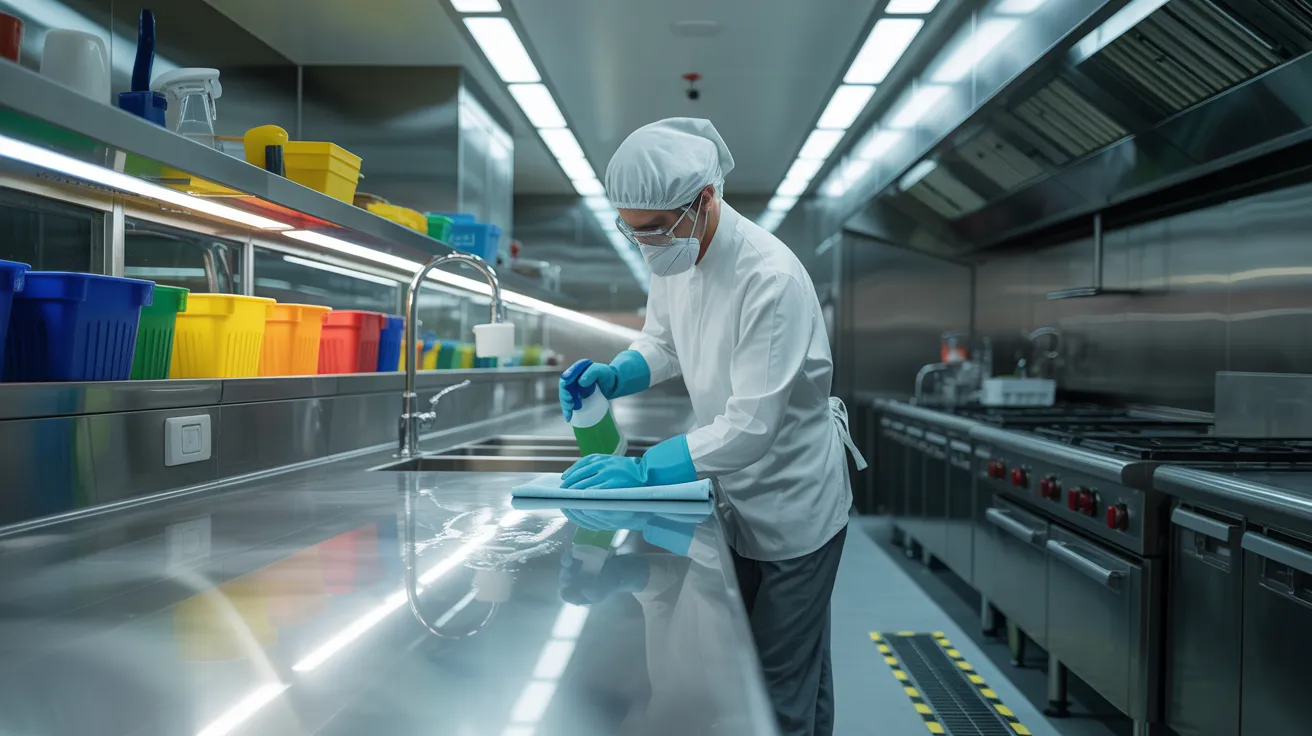
Commercial cleaning and food safety professionals in Brampton support restaurants, food centers, bakeries, warehouses, and food service operations maintaining standards. They sanitize regularly touched surfaces, food preparation surfaces, equipment, floors, drains, restrooms, and food handling spaces using certified products, at correct dilution, and recording exposure duration. You need regular sanitation based on risk, food throughput, food allergies, and regulatory assessments, along with verification records that support HACCP, quality reviews, and public health compliance. The sections below explains how effective cleaning systems should include.
Key Takeaways
- Brampton's food safety cleaning experts support restaurants, grocery departments, commissaries, warehouses, bakeries, schools, mobile vendors, and allergen-sensitive operations.
- Frequently contacted areas, food-contact equipment, kitchens, floors, drains, restrooms, and storage areas are sanitized using area-specific procedures to reduce cross-contamination.
- Documentation of conclusion through checks, assessments, and correction logs validates trained vendors have checked approved sanitizer dilution, suitability, and exposure duration.
- Risk, production volume, changeovers, accidents, and requirements must shape sanitation plans, with daily, regular, and annual duties distributed by zone.
- Providers should possess HACCP, health regulatory competency, safety training training, insurance, references, color-categorized tools, and compliance-ready hygiene files.
Brampton Venues That Need Food Safety Cleaning: Which Ones?
You must comply with food safety cleaning if your establishment is falls under public health review, food regulations, or HACCP systems. This covers dining establishments, employee cafes, distribution hubs, market sections, meat shops, fish stands, retail outlets, and food service kitchens.
You'll additionally need documented food sanitation in supply facilities, manufacturing operations, cold storage warehouses, bakeries, school food programs, reception halls, and delivery services. Mobile and temporary operations apply too, like food trucks, festival vendors, and pop-up establishments. Should your workers prepare supplies, portion finished foods, reheat items, or manage allergen inventory, your location requires written cleaning standards. In Brampton, sanitation continues to be compulsory; it comprises legal, operational, and consumer protection compliance.
Which Areas Do Brampton Cleaning Experts Cover?
Professional cleaning services specializing in Brampton sanitize touched surfaces, kitchen facilities, ground surfaces, and sanitary facilities in compliance with food safety regulations. Focus on these locations stems from extreme cross-contamination risk, potential for accidents, and compliance issues.
If you comprehend their cleaning services, you'll be able to confirm your operation satisfies all operational and regulatory compliance needs.
Sterilizing High-Touch Surfaces
develop a cleaning plan
swab testing to confirm disinfection results
Food Prep Areas, Flooring, and Sanitary Facilities
Brampton cleaning professionals will address kitchens, floors, and restrooms since each space presents different hygiene concerns, injury, and community health challenges. In industrial kitchens, you need grease removal from cooking stations, appliance surfaces, drain systems, preparation areas, and backsplashes to minimize bacterial growth and pest activity.
Documented floor care is likewise provided as part of the service.
In restrooms, cleaners disinfect contact surfaces, bathroom hardware, partition walls, accessory dispensers, and receptacles then restock supplies and control odours. They also service restaurant moprooms, where chemical storage, sink hygiene, and drainage conditions can affect sanitation compliance and staff safety daily.
How Food Safety Cleaning Benefits Brampton Operations
To comply with regulatory mandates and pass inspections, Brampton facilities must follow appropriate cleaning protocols. You also reduce bacterial spread through proper cleaning of food-preparation surfaces, appliances, and frequently-touched items. Most importantly, you help protect community wellness by reducing the chance of food poisoning in your establishment.
Health Code Compliance
Brampton food establishments must comply with rigorous sanitary regulations, so food safety cleaning is vital to satisfying health codes, safeguarding customers, and sidestepping penalties. You must maintain clean food preparation areas, recorded sanitation plans, correct sanitizer application, and auditable operational standards that meet municipal and provincial inspection expectations.
Detailed cleaning files permit you to show due diligence during inspection audits and show your practices remain consistent, consistent, and documented. Proper hygiene practices also supports allergen reduction by minimizing particles on shared equipment and regularly touched locations.
Cross-Contamination Prevention
Maintaining health code standards copyrights on your power to stop cross-contamination during daily food handling and cleaning. You need to partition uncooked items from finished dishes, sterilize work zones between assignments, and store chemicals away from food-contact items. Clear procedures reduce transfer risks and reinforce steady regulatory adherence.
Building allergen segregation prevents priority allergens from contacting common workstations, storage, or apparatus. Utilize dedicated cutting boards, color-coded tools, and precise instrument labeling so team members won't blend products in cooking or serving.Enforce handwashing after handling raw meat, seafood, eggs, or allergen-containing products. Refresh cleaning cloths frequently, and confirm disinfectant efficacy using test strips. When your team follows these practices each shift, you foster a cleaner, more secure operation that meets Brampton's food safety expectations daily.
Public Health Safeguarding
If proper sanitation declines, you don't merely risk a failed inspection—you amplify the risk of foodborne illness affecting customers, staff, and the broader Brampton region. You also weaken your role in protecting public health, especially in high-traffic food premises where pathogens travel quickly through surfaces, equipment, and touchpoints.
You need cleaning protocols that eliminate contaminants, sanitize correctly, and verify results. That means following exposure periods, employing authorized sanitizers, recording cleaning times, and educating employees to meet health-unit expectations. These measures facilitate disease prevention by reducing pathogens before they reach food or hands. In Brampton, strong sanitation protects vulnerable populations, limits outbreak potential, and helps you demonstrate proper care. When you maintain proper standards, you don't just meet regulations—you substantially decrease danger and promote secure food handling throughout the region.
In What Ways Does Cleaning Help Achieve Food Safety Compliance?
Upholding thorough cleaning protocols improves food safety compliance by reducing contamination risks, preventing pathogen multiplication, and maintaining your facility's adherence to sanitation requirements under HACCP-based programs and public health regulations. You verify that food-handling surfaces remain visibly clean learn the facts and microbiologically controlled, enabling documented preventive controls and inspection readiness.
Cleaning efforts additionally upgrade allergen mitigation by extracting residues that can trigger undeclared allergen exposure.
Finding When to Schedule Commercial Cleaning
You'll achieve the best results from cleaning plans that account for risk factors, production rates, and compliance obligations rather than a unchanging calendar system alone.
Plan cleaning before and after promotional, catering, or public functions, or gatherings for smooth event turnarounds.
Selecting the Right Brampton Cleaning Experts: Key Considerations
Evaluate providers first by sanitation compliance standards rather than price alone. You must ensure each provider understands CFIA, public health, and HACCP-aligned expectations for your business. Request proof of insurance, WHMIS compliance, staff training documentation, and supervision methods. Check technician understanding of contamination prevention, chemical safety, and documented sanitation practices.
You should also assess business dependability and accountability. Request references from Brampton food businesses, then examine response times, corrective actions, and communication standards. Confirm the company supports supplier audits and can present inspection-ready documentation when regulators or third parties request evidence. Check whether equipment maintenance is performed, color-coded implements are used appropriately, and facility-specific risks are recognized. A competent service protects regulatory adherence, product quality, and your brand reputation.
What does a Food Safety Cleaning Plan encompass?
Document a plan that outlines every sanitation task, standard, and responsibility before production begins. You should record cleaning schedules, approved products, ratios, contact periods, tools, and validation approaches for each area, surface, and device. Ensure you include pre-operational inspections, corrective actions, and employee training requirements.
Your plan should also cover contamination prevention, garbage management, pest control procedures, and recorded timelines for restrooms, drains, floors, and food-contact areas. Detail how you'll keep raw and prepared foods apart, support ingredient tracking, and ensure accurate allergen labeling through validated cleaning between product changes. You should designate accountability, maintain signed records, and compare results against regulatory standards, HACCP controls, and customer requirements. When gaps appear, revise procedures immediately and retrain staff.
Popular Inquired Inquiries
Can sanitation providers support nighttime operations in Brampton facilities?
Yes, you can arrange sanitation coverage to manage overnight shifts in Brampton facilities. You'll coordinate nighttime cleaning around production schedules, security measures, and staffing requirements. Providers typically establish nightshift procedures to minimize interruption, ensure compliance, and document completed tasks. You should confirm arrival timeframes, management, lockout procedures, and disposal methods before beginning service. If you operate regulated spaces, you'll also want cleaning records that support inspections and compliance verification.
Are hazard containment solutions provided from Brampton cleaning experts?
Yes, you can discover many Brampton sanitation experts providing spill response options. They manage contamination, evaluate risks, isolate contamination, and begin swift decontamination to minimize exposure and avoid operational impact. You should verify response rates, certifications, PPE measures, and disposal methods. If your facility must adhere to regulations, select a service that tracks incidents, adheres to standards, and ensures audit compliance.
Are green disinfectants safe for surfaces contacting food?
In essence, eco-friendly disinfectants function safely for surfaces contacting food provided you buy disinfectants approved for food contact that adhere to compliance requirements. Check exposure duration, concentration levels, and rinse procedures ahead of deployment. Plant-derived products minimize chemical hazards, although you require evidence of effectiveness against relevant pathogens. For maintaining residue free surfaces, implement manufacturer directions precisely and validate the disinfecting agent meets food sanitation requirements.
Can cleaning schedules be customized for seasonal production changes?
Without question, cleaning plans adjust easily for seasonal production changes. Adjust frequencies, labor allocation, chemicals, and testing procedures to correspond to operational cycles while sustaining compliance standards. Reduce production interruptions by planning disinfection around changeovers, maximum output, and usage patterns. Additionally update standard operating procedures, staff education, and facility monitoring to reflect temporary risks, new allergens, or elevated soil levels. Ongoing evaluations keep the strategy current.
Do professional cleaners coach staff members in proper hygiene techniques?
Indeed, professional cleaners typically provide employee coaching on proper hygiene. Your team receives instruction on safe chemical application, exposure durations, preventing cross-contamination, equipment breakdown, and documentation. They generally adhere to training with HACCP, GMP, and CFIA or regional health standards requirements. Many perform compliance inspections to verify compliance, identify gaps, and reinforce corrective actions. This supports you in maintain consistent procedures, achieve compliance, and decrease foodborne illness risks on a daily basis.
Summary
Through working with Brampton food safety and commercial cleaning experts, you do far more than tidy—you keep your operation prepared for audits and your procedures meet requirements. From production floors to kitchens, all maintained surfaces and kept corners reduce contamination risks and prevent significant costs. Through scheduling maintenance at proper intervals and adhering to a comprehensive cleaning program, you safeguard your team, your patrons, and your standing. Within strict regulatory frameworks, proper sanitation cannot be considered optional—they represent good business practice.